
April 28, 2026 marked the World Day for Safety and Health at Work, led by the International Labour Organization (ILO). This year’s theme – “Good psychosocial working environments: A pathway to thriving workers and strong organizations”- highlights an increasingly important area in workplace safety: psychosocial hazards.
While traditional safety programs have focused on physical, chemical, and biological risks, organizations are recognizing that how work is designed, managed, and experienced plays a critical role in employee health, safety, and performance.
What Are Psychosocial Hazards?
Psychosocial hazards stem from the way work is structured and managed. According to the ILO, they include factors such as:
- Workload and working hours
- Role clarity and expectations
- Level of autonomy and control
- Communication and leadership support
- Workplace culture and organizational processes
These factors directly influence stress levels, mental health, engagement, and overall safety outcomes.
In high-risk industries like construction, manufacturing, and energy, unmanaged psychosocial risks can lead to fatigue, reduced situational awareness, increased human error, and lower morale and retention. Simply put-risk is risk, whether physical or psychological.
Why It Matters for Safety Programs
Modern EHS programs are evolving to take a more holistic view of risk. Integrating psychosocial considerations helps organizations:
- Improve worker well-being and job satisfaction
- Reduce incidents and near misses
- Strengthen safety culture and communication
- Enhance productivity and operational performance
- The ILO framework evaluates psychosocial hazards across three levels:
- The job itself
- How work is managed and organized
- The broader policies, practices, and procedures that govern work
- Effective safety programs consider all three—allowing organizations to identify risks and implement practical, preventative solutions.
Where to Start
Each workplace has unique factors that influence psychosocial risk, including:
- Job demands and workload
- Management approach and communication
- Organizational systems and policies
- Workplace and safety culture
- Common areas that often require attention include scheduling, supervision, expectations, communication, and leadership style.
- Addressing psychosocial hazards doesn’t require a complete overhaul—it starts with awareness and small, intentional improvements.
At Citadel EHS, we see psychosocial risk as a natural extension of core safety services such as industrial hygiene, exposure monitoring, and health and safety program development. Integrating these considerations into task hazard analyses, risk assessments, and training programs helps organizations move from reactive response to proactive prevention.
A Culture That Supports Safety
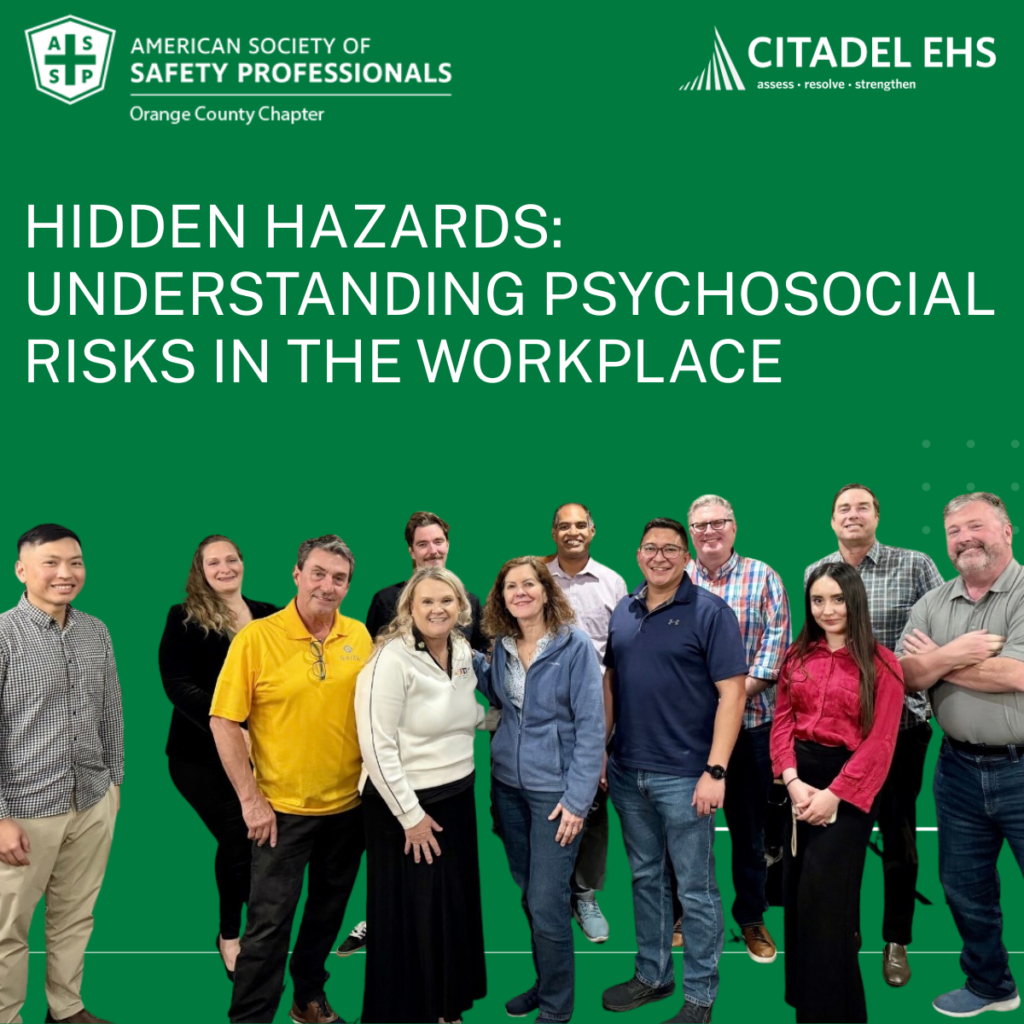
Strong safety performance starts with people. At Citadel EHS, we’re proud to have leaders like Corporate Safety Officer Victoria Codella, who actively promotes awareness of psychosocial risk.
Victoria recently presented on this topic at an industry safety meeting, sharing practical insights and helping advance the conversation among safety professionals.
Looking Ahead
As the definition of workplace safety continues to evolve, psychosocial hazards will play an increasingly important role.
Organizations that recognize and address these risks as part of their overall safety strategy will be better positioned to build resilient, high-performing teams – where both people and operations can thrive.